Last updated
The Glow Stack is a research peptide combination consisting of GHK-Cu, TB-500, and BPC-157 in a single lyophilized vial. It is commonly discussed in laboratory and preclinical research because the three peptides act on different but overlapping pathways: copper-binding and extracellular matrix signaling, actin-related cell migration, and cellular protection signaling.
This page provides an educational overview of the Glow Stack for laboratory research purposes only. NexPept supplies this peptide combination strictly for non-clinical research applications, with a focus on purity, documentation, and consistency. New to the topic? Start with our guide to what research peptides are or our overview of research peptides in Canada.
The Glow Stack is intended strictly for laboratory research use only. It has not been authorized by Health Canada for human or veterinary use.
What Is the Glow Stack?
The Glow Stack is a combined research formulation that brings together three well-studied peptides in one vial, so a single reconstitution covers all three compounds rather than three separate vials prepared independently.
In laboratory research settings, these peptides are often discussed together because their pathways overlap: extracellular matrix and copper-mediated signaling, cytoskeletal and cell-migration research, and cellular protection signaling models.
Glow Stack Composition & Vial Specifications
The blend is supplied as a 70mg lyophilized powder. Researchers use the per-component amounts below when planning concentrations, since each peptide is present at a different quantity in the same vial.
| Product | Glow Stack (Glow Blend) 70mg |
| Total content | 70mg lyophilized blend per vial |
| GHK-Cu | 50mg |
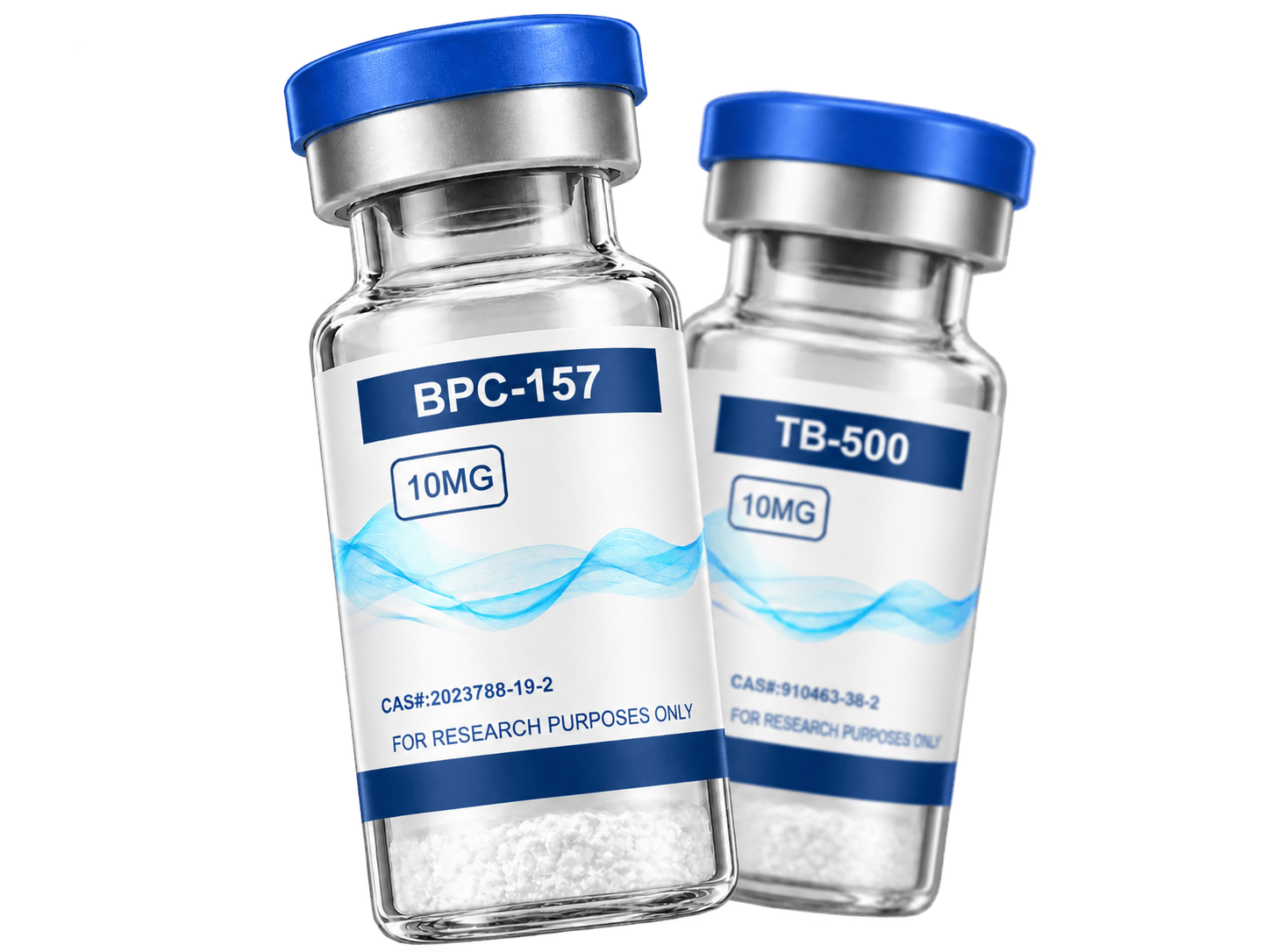
| TB-500 | 10mg |
| BPC-157 | 10mg |
| Physical form | Lyophilized powder, white to off-white solid |
| Analytical methods | HPLC + mass spectrometry (MS), reported per component |
| Intended use | Laboratory research use only |
The Three Peptides in the Blend
Each component has its own structure and its own body of research literature. The table below summarises how each is described in laboratory research, and links to the full overview for each compound.
| Compound | Classification | Typical research context |
|---|---|---|
| GHK-Cu | Copper-binding tripeptide (glycine–histidine–lysine bound to a copper ion) | Extracellular matrix, collagen-related and copper-peptide signaling models |
| TB-500 | Synthetic peptide related to thymosin beta-4 | Actin regulation, cell migration and angiogenesis-related models |
| BPC-157 | Synthetic pentadecapeptide (15 amino acids), CAS 137525-51-0 | Cellular signaling, cytoprotection and gastrointestinal research models |
Reviewing each peptide individually can provide additional context for laboratory research planning, especially when a study needs a single-compound control alongside the blend.
Why Researchers Study This Combination
In preclinical and laboratory environments, peptide combinations are explored to better understand how multiple signaling pathways may interact within one controlled model. The Glow Stack has been examined in research contexts related to:
All findings related to this combination remain strictly within research and experimental contexts, and interpretations should be limited to laboratory data only. To explore the published literature, you can search PubMed for BPC-157, thymosin beta-4 and GHK-Cu research.
Blend vs. Separate Vials: What to Account For
A blend is convenient, but it changes a few things about study design. Points researchers commonly account for:
For single-compound work, the same three peptides are available individually. See the product links further down this page.
Purity & Documentation in Research Peptide Blends
When working with peptide combinations, purity and consistency become even more critical, because variability in one component can affect the whole result. High-quality research peptide blends should include:
Storage & Handling (Research Use)
Proper storage and handling are essential to maintain peptide integrity during laboratory research, especially with multi-peptide formulations. General laboratory considerations include:
Always follow your laboratory's established procedures when working with peptide compounds or combinations. No preparation, reconstitution, or administration instructions are provided.
Related Research Peptides
Researchers exploring the Glow Stack may also want the individual peptides for single-compound controls:
Glow Stack Research Product
Researchers seeking the Glow Stack for laboratory use can view the corresponding product page below:
Glow Stack Research FAQ
What is the Glow Stack?
The Glow Stack is a research peptide blend supplied as a single lyophilized vial containing GHK-Cu, TB-500, and BPC-157. It is studied in laboratory models that look at more than one signaling pathway at a time.
What does the Glow Stack contain?
The 70mg vial contains 50mg GHK-Cu, 10mg TB-500, and 10mg BPC-157, supplied as a lyophilized powder for laboratory research use.
Why is a blend studied instead of single peptides?
Blends let researchers observe how several pathways behave together in one controlled model: copper-binding and extracellular matrix signaling from GHK-Cu, actin-related cell migration from TB-500, and cellular protection signaling from BPC-157. A blend also removes the variability of mixing three separate vials.
Is a blend the same as the three peptides studied separately?
No. Results from a combined formulation should not be assumed to match results from each component tested on its own. That assumption is a common source of error in blend research, so comparisons need a separate control.
How is the purity of a blend verified?
Each component is tested by HPLC for purity and confirmed by mass spectrometry, with batch-specific results published in our COA library. With a blend, check that the certificate reports each peptide separately rather than one combined figure.
Is the Glow Stack approved by Health Canada?
No. It has not been authorized by Health Canada for human or veterinary use. NexPept supplies it for in vitro laboratory research only.
How should the Glow Stack be stored?
Store the sealed lyophilized vial in a cool, dry place, protected from light and moisture, and follow your institution's approved handling protocols. Storage parameters should be set by qualified research personnel.